
Does a deep ache in one buttock shoot down the back of your leg when you sit too long, climb stairs, or go for a run? That pattern is often piriformis syndrome, and piriformis syndrome treatment Surrey physiotherapists provide starts with an honest point that shapes everything else in this guide: the pain feels like sciatica, but the problem is usually a small muscle in the buttock pressing on the sciatic nerve, not a problem in the spine, and that difference changes how it is assessed and treated.
What Is Piriformis Syndrome?
Piriformis syndrome is a neuromuscular condition in which the piriformis muscle irritates or compresses the sciatic nerve. The muscle itself is only about the size of a small pear, but it sits in a crowded area. The sciatic nerve is roughly as thick as a thumb where it passes the muscle, and there is very little spare room. Anything that makes the muscle swell, tighten, spasm, or develop scar tissue can narrow that space and press on the nerve.
The piriformis does far more work than its size suggests. Every step you take uses it: it rotates the thigh outward when the hip is straight, steadies the pelvis when you stand on one leg, and helps control the leg during running and stair climbing. That is why the condition shows up in two very different groups of people: those who sit for most of the day, which keeps the muscle shortened and under pressure, and those who overuse it, such as long-distance runners, cyclists, and people who suddenly increase training volume. In a minority of people, the sciatic nerve passes through the muscle rather than under it, which can make irritation more likely.
Symptoms of Piriformis Syndrome
Piriformis syndrome symptoms are usually felt in the buttock, hip, or upper leg, often on one side only, though both sides can be affected. The common pattern includes:
- A deep, dull ache or sharp pain in one buttock, sometimes described as a tight knot or a toothache in the hip.
- Pain, burning, tingling, or numbness that travels down the back of the thigh and sometimes into the calf or foot.
- Pain that worsens after sitting for a long time, especially on hard surfaces, and eases when you stand and walk around.
- Pain when climbing stairs or walking up hills, and pain when running or cycling.
- Tenderness when you press on the buttock, or pain when you cross the sore leg over the other one.
- Difficulty sitting comfortably, with frequent shifting or needing to sit on the opposite buttock.
- In some people, pain when lying on the sore side, or a feeling that the leg is weak or gives way.
Piriformis Syndrome vs Sciatica: How They Differ
Piriformis syndrome and sciatica are often confused, and the confusion matters because the treatments differ. Sciatica is not a diagnosis; it is a description of symptoms, pain, tingling, or numbness along the path of the sciatic nerve. A herniated disc or spinal stenosis in the lower back is the most common cause of sciatica. Piriformis syndrome is one specific cause of sciatica, where the nerve is irritated in the buttock rather than at the spine.
Several clues help tell them apart. In piriformis syndrome, the pain is usually centred in the buttock and hip, with tenderness you can press on, and it is often reproduced by rotating the hip or sitting for a long time. Lower back pain is usually mild or absent. In spine-driven sciatica, the pain more often starts in the lower back, a cough, sneeze, or strain can shoot pain down the leg, and bending forward or lifting tends to aggravate it. A straight-leg raise test, where the leg is lifted while lying down, often reproduces spine-driven sciatica but is less reliable for piriformis syndrome.
Causes and Risk Factors for Piriformis Syndrome
Piriformis syndrome develops when something makes the piriformis muscle press on the sciatic nerve. The most common drivers are:
- Prolonged sitting. This is the most common trigger in non-athletes. Sitting for hours, especially on a hard chair or with a wallet in the back pocket, keeps the piriformis compressed and shortened. Desk workers and long-distance drivers are the classic examples. Our guide to lower back pain after sitting covers the same sitting-load principles for people whose pain starts at the desk.
- Overuse and sudden training increases. Long-distance running, hill running, cycling, and sports that demand repeated hip rotation can overwork the piriformis, especially after a sudden jump in distance, intensity, or hill work. The muscle swells or spasms, and the nerve feels it.
- Injury to the hip or buttock. A fall onto the buttock, a direct blow in sport, or a hip injury can bruise the muscle or leave scar tissue that later irritates the nerve.
- Muscle imbalance and weak hip stabilisers. When the deep hip stabilisers, especially the gluteus medius, are weak, the piriformis takes on extra work to steady the pelvis, and it can become overactive and tight. This is one reason strengthening, not just stretching, is part of a proper program.
- Previous hip or back problems. A prior hamstring injury, hip bursitis, or a long-standing back problem can change hip mechanics and leave the piriformis compensating. If your outer hip is also sore, our guide to hip bursitis treatment in Surrey explains how that neighbouring condition is managed.
How Piriformis Syndrome Is Diagnosed
There is no single test that confirms piriformis syndrome, so diagnosis is built from the history, the examination, and ruling out other causes. Your physiotherapist or doctor will start by asking when the pain started, what makes it better or worse, how long you sit each day, what training or work you do, and whether there was an injury or a sudden change in activity. The pattern of answers often points toward the piriformis before any hands-on testing begins.
The examination looks at how you stand, sit, and walk, then tests the hip in specific positions. Common clinical tests include the FAIR test, where the hip is flexed, brought across the body, and internally rotated while you lie on your side, which stretches the piriformis over the nerve; the Beatty test, where you lie on the unaffected side and lift the bent knee of the sore side; and the Pace test, where you push the legs outward against resistance while seated. Tenderness when the piriformis is pressed, pain reproduced by these manoeuvres, and a lower back and sacroiliac joint that test normally all support the diagnosis.
Imaging is used mainly to rule out other causes, not to prove piriformis syndrome. An X-ray or MRI of the lower back is ordered when spine-driven sciatica is suspected, and an MRI of the hip can show muscle swelling or rule out a hip joint problem, a fracture, or a tumour. Nerve conduction studies and EMG are sometimes used when the diagnosis is unclear. A physiotherapist cannot order imaging in place of a doctor, but we will examine you, explain findings in plain words, and coordinate with your doctor when imaging or a specialist opinion is needed.
Piriformis Syndrome Treatment in Surrey: Conservative Care First
Most cases of piriformis syndrome improve without surgery, and conservative care is the right first step. The goals are straightforward: calm the irritated muscle and nerve, restore normal hip movement, strengthen the muscles that support the hip, and fix the daily habits that keep provoking the problem. Treatment works best when it addresses all four, not just one.
- Activity modification, not bed rest. Ease off the activities that flare the pain for a few days, usually long sitting, hard running, or heavy hill work. Complete rest is not recommended: gentle walking keeps blood flowing and prevents the muscle from stiffening further. Swap running for cycling or swimming for a week or two if those do not provoke symptoms, then rebuild volume gradually.
- Sitting changes. Stand and walk for a few minutes every 30 to 45 minutes, avoid sitting on a wallet or phone in the back pocket, use a chair with a soft seat and good support, and keep both feet flat on the floor with the hips slightly higher than the knees.
- Ice and heat. Ice over the buttock for 10 to 15 minutes can calm a fresh flare, especially after activity. Heat can help a chronically tight muscle relax before stretching.
- Medication. Over-the-counter anti-inflammatory medication (NSAIDs) such as ibuprofen can reduce pain and inflammation in the short term. Muscle relaxants and prescription pain medication are sometimes used for severe symptoms, but only a doctor can prescribe them. Discuss choices with your doctor or pharmacist, especially if you have stomach, kidney, heart, or blood-pressure concerns.
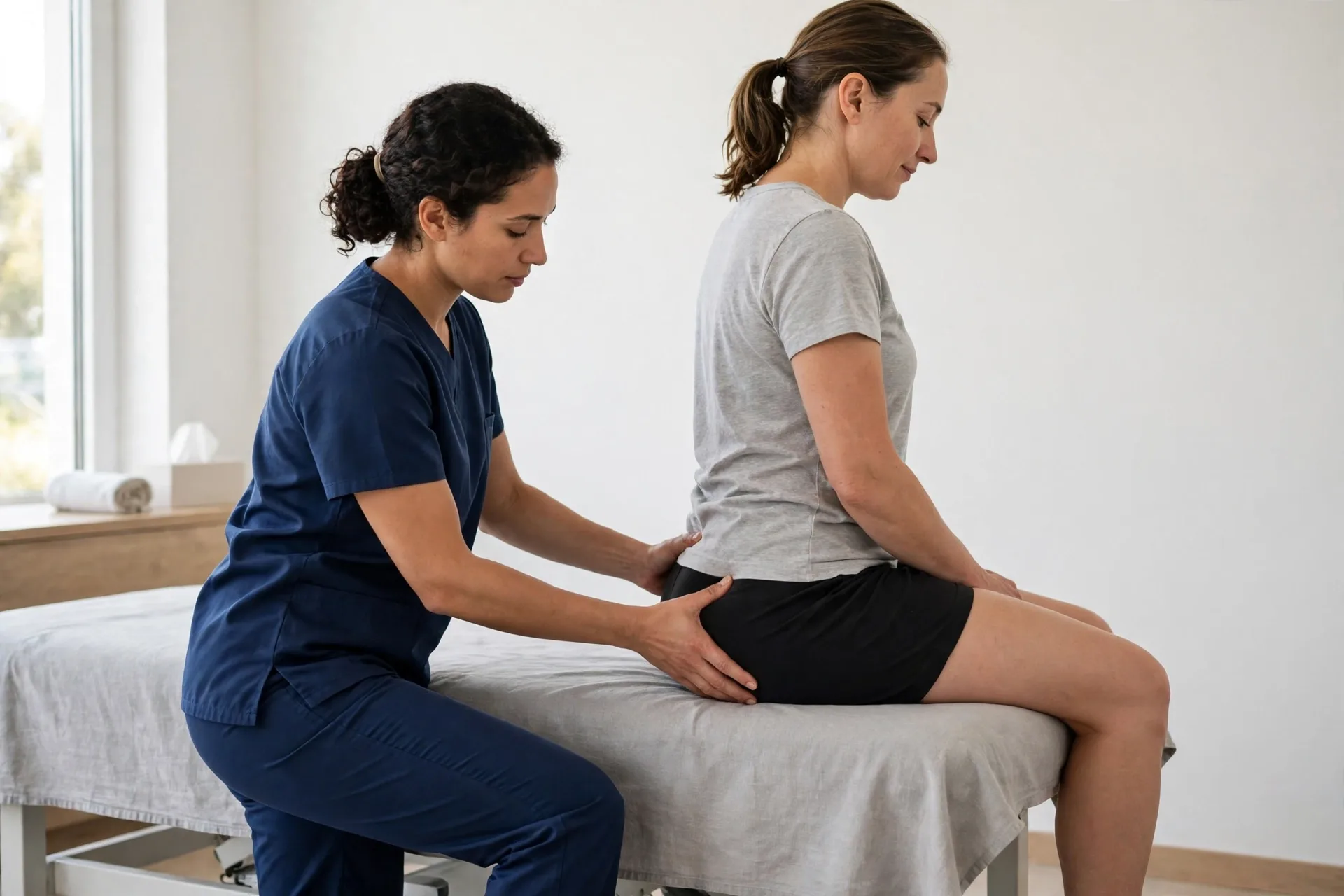
- Massage and soft-tissue work. Hands-on work to the piriformis, the gluteal muscles, and the surrounding hip rotators can reduce spasm and tenderness. Deep tissue massage to the buttock is uncomfortable during the session and often sore for a day after, but many people find it helps the muscle release. Foam rolling the buttock and outer hip can be a useful home version, used gently and stopped if it sends shooting pain down the leg.

How Physiotherapy Helps Piriformis Syndrome
Physiotherapy for piriformis syndrome has four honest goals: reduce muscle spasm and nerve irritation, restore hip mobility, strengthen the hip stabilisers so the piriformis stops overworking, and rebuild tolerance for sitting, walking, and sport. Many people feel noticeably better within 2 to 4 weeks, but a long-standing case commonly takes 6 to 12 weeks of consistent work.
Exercises for Piriformis Syndrome: Stretching and Strengthening
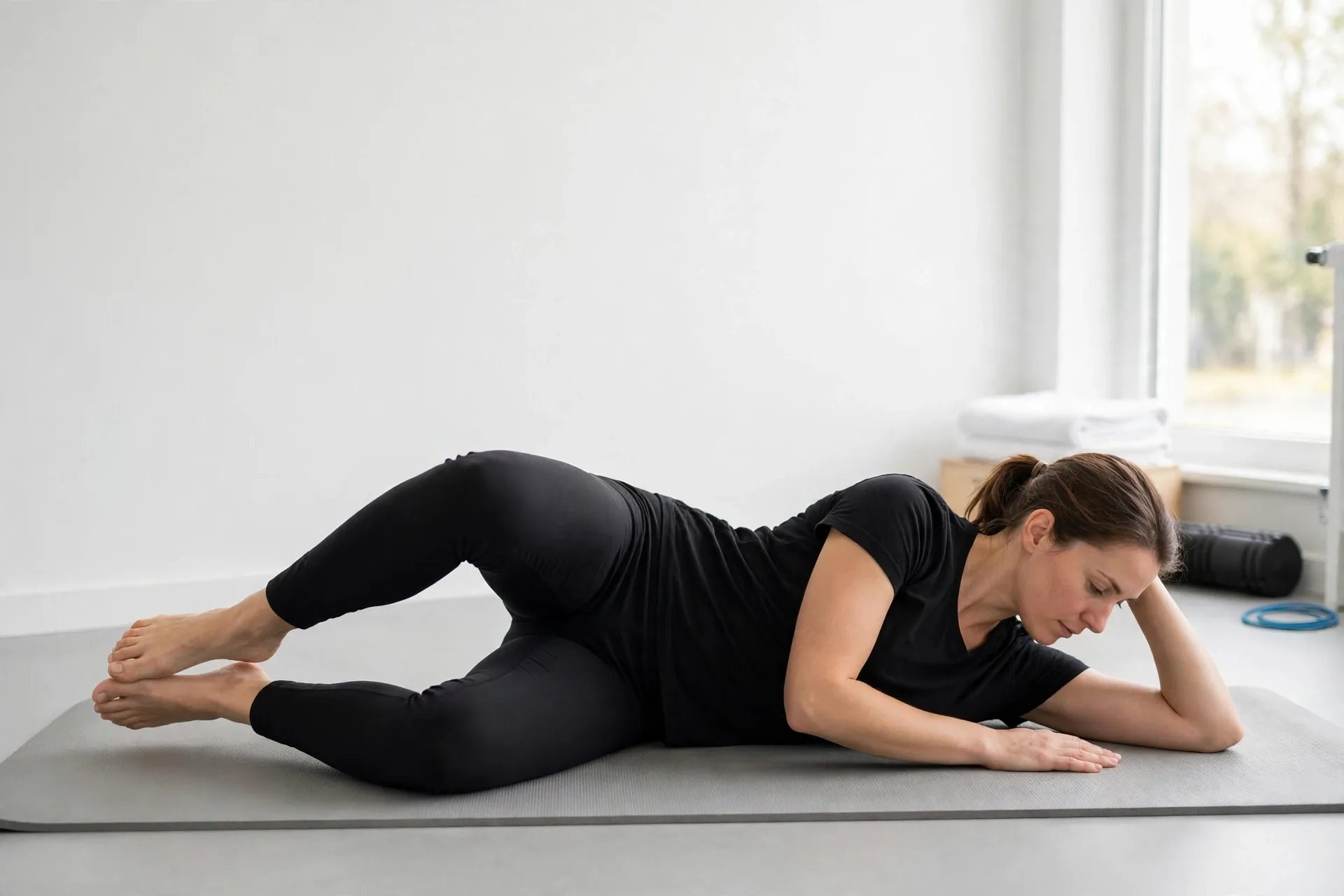
These exercises are general guidance, not a prescription. They should feel like a stretch or a muscle working, not sharp pain. If an exercise sends shooting pain, numbness, or tingling down the leg, stop it and tell your physiotherapist. People with a hip replacement, a recent hip injury, or a known disc problem should get individual advice before starting.
When Are Injections or Surgery Considered?
Injections and surgery are second-line options, considered only when conservative care has had a fair trial and symptoms persist. A corticosteroid injection, sometimes combined with a local anaesthetic, can be placed into or near the piriformis under ultrasound or imaging guidance to reduce inflammation and confirm the diagnosis: if the injection relieves the pain, it supports the piriformis as the source. Botulinum toxin (Botox) injections are sometimes used to relax a persistently spasming piriformis. Both are performed by a doctor, not a physiotherapist, and both work best as a window to progress exercise, not as a standalone fix.
Surgery is rare and is usually not recommended unless all other treatments have failed. The procedure typically involves cutting the piriformis tendon where it attaches to the hip, or releasing the muscle to free the sciatic nerve. It is a specialist decision, made after imaging and a thorough work-up to exclude every other cause, and recovery involves a period of protected activity followed by physiotherapy. Most people never need to have this conversation, and a good first step is an assessment that confirms the piriformis is truly the source.
Red Flags: When to Get Checked Promptly
Most piriformis syndrome is not an emergency, but some presentations should never wait for a routine appointment:
- Sudden weakness in the leg or foot, such as a foot that drops when you walk, or rapidly worsening weakness.
- Loss of bladder or bowel control, or numbness in the saddle area between the legs. These can signal cauda equina syndrome and need emergency care.
- Pain after a significant fall or injury to the hip or back, which can mean a fracture.
- Pain that is severe, unrelenting, or worse at night, or pain with unexplained weight loss or fever.
- Numbness or tingling that is spreading, or pain in both legs that is getting worse.
- A history of cancer with new buttock or leg pain, which needs doctor review.
- Pain that persists despite several weeks of proper conservative care, which warrants imaging review and a specialist opinion.
Preventing Piriformis Syndrome and Stopping It Coming Back
Recurrence is common if the habits that caused the problem do not change, so prevention is part of treatment. Break up long sitting with a short walk and stretch every 30 to 45 minutes, and avoid sitting on a wallet or phone in the back pocket. Increase training volume gradually, no more than about 10 percent per week, and include rest days and cross-training so the same muscles are not loaded the same way every day. Keep hip strength in your routine year-round: clamshells, bridges, and side-lying hip work take minutes and keep the stabilisers sharing the load. Warm up before running or sport, stretch the hips and hamstrings after, and replace worn running shoes. Act on early tightness rather than waiting until sitting becomes painful.
Piriformis Syndrome Care at Renew Physiotherapy in Surrey
Frequently Asked Questions
The two feel similar, but the pattern differs. Piriformis syndrome pain is usually centred in the buttock, with tenderness you can press on, and it flares with sitting, stair climbing, and hip rotation, often with little or no lower back pain. Spine-driven sciatica more often starts in the lower back, and coughing, sneezing, or bending forward can shoot pain down the leg. A hands-on assessment with specific hip tests and a lower back screen is the reliable way to tell them apart, and the two can coexist.
It depends on how long the problem has been present. Mild, recent cases often improve noticeably within 2 to 4 weeks of activity changes and a stretching and strengthening program. Long-standing cases commonly take 6 to 12 weeks of consistent work. Cases that do not improve after a full trial of conservative care warrant imaging review and a discussion about injections with your doctor.
Yes, in most cases. Gentle, frequent walking keeps the piriformis moving through its normal range, improves blood flow, and prevents the stiffness that long sitting creates. Start with short, comfortable walks and build the time gradually. Stop and rest if walking sends shooting pain or numbness down the leg, and tell your physiotherapist.
The figure-four stretch is the most useful for most people: lying on your back, cross the ankle of the sore leg over the opposite knee and gently pull the lower knee toward your chest, holding 30 seconds, 3 times per side. The seated version of the same stretch works well at a desk. Stretching helps most when paired with strengthening, because a piriformis that keeps tightening is often compensating for weak hip stabilisers.
Sometimes, especially mild cases triggered by a single bout of overuse. But cases driven by long sitting, weak hip stabilisers, or a training habit that does not change tend to recur. A short program of stretching, strengthening, and sitting changes usually resolves the problem faster and reduces the chance it comes back.
See a physiotherapist if buttock pain limits sitting, walking, work, or exercise, if the pain travels down the leg, if it has lasted more than a week or two, or if you are unsure whether the cause is the piriformis or the back. Seek prompt medical care if you develop leg weakness, bladder or bowel changes, saddle numbness, pain after a fall, or pain that is severe, unrelenting, or worse at night. No doctor's referral is needed to see a physiotherapist in BC.