
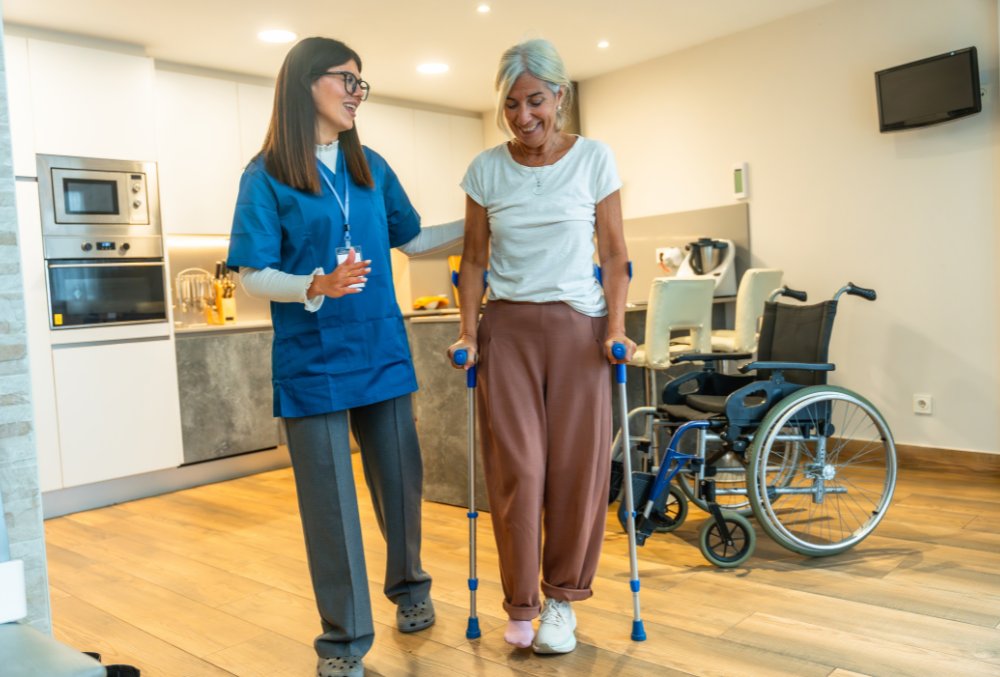
Active rehabilitation therapy focuses on restoring strength, movement, and function through guided exercise. Often, pain or injury limits daily activity and confidence. However, avoiding movement usually slows recovery. Therefore, active rehabilitation encourages safe and controlled movement from the start. With proper guidance, patients regain strength and return to normal routines.
In addition, active rehabilitation supports long-term recovery. Instead of relying on passive care, it trains the body to move correctly again. As a result, muscles strengthen, joints stabilize, and confidence improves. Over time, daily activities feel easier and safer.
What Is Active Rehabilitation?
Active rehabilitation is an exercise-based physiotherapy program designed for recovery and performance. First, a physiotherapist assesses movement, strength, and flexibility. Next, problem areas are identified. Based on these findings, a personalized rehabilitation plan is created.
Moreover, active rehabilitation requires patient participation. Because patients stay actively involved, recovery becomes more effective. As progress continues, exercises adapt to match strength and function levels.
How Active Rehabilitation Differs from Passive Treatment
Passive treatments may reduce pain temporarily. However, they do not always restore full strength or movement. In contrast, active rehabilitation focuses on long-term improvement.
Through repeated movement, the body relearns proper control. As muscles strengthen, joint support improves. Consequently, the risk of re-injury decreases. Over time, patients gain independence in managing their condition.
Conditions Treated with Active Rehabilitation
Active rehabilitation supports recovery from many physical conditions. Because it is adaptable, it suits people of all ages.
Common conditions include:
- Sports injuries and muscle strains
- Post-surgical weakness and stiffness
- Chronic back and neck pain
- Knee, shoulder, and hip injuries
- Workplace and repetitive strain injuries
Additionally, active rehabilitation helps prevent future injuries by improving movement control.
Why Active Rehabilitation Is Important
After injury, the body often develops poor movement habits. As a result, pain and weakness increase. Therefore, correcting movement patterns becomes essential.
Furthermore, active rehabilitation improves muscle balance and joint stability. As weak areas strengthen, strain reduces. Over time, movement efficiency improves and pain decreases.
Core Principles of Active Rehabilitation
Active rehabilitation follows structured principles to ensure safety and progress.
These principles include:
- Gradual exercise progression
- Focus on proper movement mechanics
- Individualized treatment planning
- Functional and goal-based exercises
- Ongoing assessment and adjustment
Because of this structure, recovery stays safe and effective.
Exercise Therapy in Active Rehabilitation
Exercise therapy forms the foundation of active rehabilitation. Through guided exercises, strength, flexibility, and control improve. As the body adapts, tolerance to activity increases.
Exercise therapy may include:
- Strength training for joint support
- Stretching to improve flexibility
- Mobility exercises to restore movement
- Balance training for stability
- Functional exercises for daily tasks
Initially, exercises remain gentle. Gradually, difficulty increases. As a result, recovery becomes steady and sustainable.
Functional Training and Movement Re-Education
Functional training prepares the body for real-life movements. For example, exercises may mimic lifting, walking, or reaching. Therefore, patients feel more confident during daily activities.
At the same time, movement re-education corrects faulty patterns. As technique improves, strain reduces. Over time, these improvements prevent recurring injuries.
Active Rehabilitation for Sports Recovery
Athletes often require active rehabilitation to return safely to sport. Because sports demand strength and coordination, structured exercise becomes essential.
Moreover, sport-specific training improves agility and endurance. As recovery progresses, performance improves. Ultimately, athletes return stronger and more confident.
Active Rehabilitation After Surgery
After surgery, weakness and stiffness are common. Therefore, active rehabilitation plays a key role in recovery. With early movement, circulation improves and stiffness reduces.
As healing continues, exercises progress safely. Over time, strength and function return. Consequently, daily activities feel easier.
Pain Management Through Active Rehabilitation
Active rehabilitation helps manage pain naturally. Through movement, blood flow improves and tension decreases. As a result, pain sensitivity reduces.
In addition, education helps patients move without fear. Because confidence improves, activity levels increase safely.
Who Can Benefit from Active Rehabilitation?
Active rehabilitation suits a wide range of individuals.
People who benefit include:
- Individuals recovering from injury
- Patients after surgery
- Athletes returning to sport
- Office workers with posture-related pain
- Seniors maintaining mobility
Importantly, early participation improves outcomes.
Active Rehabilitation in Surrey and Langley
People in Surrey, Langley, Cloverdale, South Surrey, Clayton, and Willoughby often experience pain from busy lifestyles. Because of this, access to active rehabilitation is important.
With professional care, recovery starts earlier. As a result, patients return to work and daily life faster.
Why Choose Professional Active Rehabilitation Services
Professional care ensures accurate assessment and safe progression. Because physiotherapists understand movement mechanics, treatment stays effective.
Professional active rehabilitation offers:
- Personalized exercise programs
- Guided progression
- Reduced re-injury risk
- Improved long-term function
- Education for self-management
Active Rehabilitation at Renew Clinics
At Renew Clinics, we provide structured active rehabilitation programs focused on long-term recovery. First, our physiotherapists assess movement and strength. Then, we design personalized exercise programs. By combining functional training and education, we support safe recovery.
Serving Surrey and Langley, Renew Clinics is a leading service provider committed to helping patients regain strength, confidence, and an active lifestyle.