
Heel pain can turn ordinary activities into a daily struggle. Walking to work, standing for long periods, exercising, climbing stairs, or simply taking the first few steps after getting out of bed can become uncomfortable when plantar fasciitis develops.
Plantar fasciitis is one of the common causes of heel pain and is often associated with repeated stress on the plantar fascia, a strong band of connective tissue that runs along the bottom of the foot. While the condition can improve with appropriate care, ignoring persistent symptoms may make it harder to return to normal activities.
At Renew Physiotherapy and Sports Clinic, physiotherapy care is personalized around the individual’s condition, movement limitations and recovery goals. The clinic serves patients in Surrey and surrounding communities including Cloverdale, Langley, South Surrey, Clayton and Willoughby.
What Is Plantar Fasciitis?
Plantar fasciitis is a painful condition involving the plantar fascia, a thick band of tissue extending from the heel toward the toes. This tissue helps support the arch of the foot and contributes to the foot’s ability to absorb and transfer forces during walking and other activities.
Every time you take a step, your feet deal with mechanical stress. Normally, the tissues of the foot adapt to this load. However, when the amount of stress exceeds the body’s ability to recover, irritation and pain can develop.
Plantar fasciitis is often associated with pain around the bottom or inside of the heel. Some people experience symptoms primarily after periods of rest, while others notice pain during prolonged standing, walking or exercise.
It is important to understand that not every case of heel pain is plantar fasciitis. Heel pain can have different causes, so an accurate assessment is useful before deciding on treatment.
A physiotherapist can examine your symptoms, foot and ankle mobility, muscle strength, movement patterns and activity levels to determine whether plantar fasciitis may be contributing to your discomfort.
What Does Plantar Fasciitis Feel Like?
The symptoms of plantar fasciitis can vary depending on the individual and the severity of the condition. However, several patterns are commonly reported.
One of the most recognizable symptoms is pain during the first few steps after waking up in the morning. The discomfort may decrease as you begin moving, although it can return later in the day.
You may also experience:
- Sharp or aching pain underneath the heel
- Pain along the bottom of the foot
- Heel discomfort after sitting for a long time
- Pain when standing for extended periods
- Discomfort after walking or running
- Tightness in the calf or foot
- Reduced tolerance for exercise
- Difficulty walking normally because of pain
- Increased symptoms after suddenly increasing physical activity
For some people, the pain is mild and occasional. For others, it can interfere with work, exercise, sleep and everyday mobility.
Persistent pain should not simply be dismissed as something that will eventually disappear. If symptoms continue or interfere with your normal activities, professional assessment can help identify the contributing factors.
Why Is Plantar Fasciitis Worse in the Morning?
Morning heel pain is one of the symptoms people commonly associate with plantar fasciitis.
During sleep, your foot remains relatively still for several hours. When you get out of bed and take your first steps, the plantar fascia is suddenly placed under load again.
This transition from rest to weight-bearing can make the first few steps uncomfortable.
Some people notice that the pain improves after walking for a while. However, that does not necessarily mean the underlying problem has disappeared. Symptoms can return after prolonged standing, walking or exercise.
If you repeatedly experience significant heel pain when getting out of bed, it is worth paying attention to the pattern rather than simply pushing through it.
What Causes Plantar Fasciitis?
There is rarely one universal cause of plantar fasciitis. Instead, several factors can combine to increase stress on the plantar fascia.
Sudden Increase in Physical Activity
Increasing your walking, running or exercise volume too quickly can place additional stress on the tissues of the foot.
For example, someone who normally walks a few kilometres per week may suddenly begin training for a long-distance event. If the body does not have enough time to adapt, the increased workload may contribute to foot and heel symptoms.
The same principle can apply to people starting a new workout routine.
Prolonged Standing
People whose jobs require them to stand or walk for many hours may place considerable repetitive load on their feet.
Teachers, healthcare workers, retail employees, warehouse workers, hospitality staff and others who spend much of the workday on their feet may experience recurring foot discomfort.
Running and High-Impact Activities
Running and other impact-based activities place repeated forces through the feet and lower limbs.
This does not mean running is inherently bad for your feet. Rather, training volume, recovery, strength, footwear, running mechanics and other factors need to be considered together.
Tight Calf Muscles
Limited calf flexibility can influence ankle movement and the way forces are distributed through the foot.
If ankle mobility is restricted, the body may compensate through other joints and tissues during walking or running.
A physiotherapy assessment can help determine whether calf tightness or ankle mobility may be relevant to your symptoms.
Foot and Lower-Limb Mechanics
The way your foot, ankle, knee and hip work together can affect how forces are distributed during movement.
A physiotherapist may assess your movement patterns to identify areas of weakness, stiffness or altered mechanics that could be contributing to repeated stress.
Unsuitable or Worn Footwear
Shoes that do not suit your activity or provide appropriate support may contribute to foot discomfort in some situations.
This does not mean expensive footwear is automatically better. The right choice depends on your activity, foot structure, comfort, training demands and individual needs.
Changes in Training Surface
Moving suddenly from one type of surface to another can alter the mechanical demands placed on your feet.
For example, a change in running route, training environment or exercise routine may increase the amount of stress your lower limbs experience.
Who Is More Likely to Develop Plantar Fasciitis?
Plantar fasciitis can affect people with very different lifestyles.
It may occur in:
- Runners
- Recreational athletes
- People who walk frequently
- People who stand for long periods
- Individuals returning to exercise
- People who have recently increased activity
- Workers with physically demanding jobs
- Individuals with reduced ankle or calf mobility
- People experiencing changes in lower-limb mechanics
Age and activity level can influence risk, but plantar fasciitis is not limited to one particular group.
This is why treatment should be individualized rather than based on a generic exercise list found online.
How Is Plantar Fasciitis Diagnosed?
A healthcare professional can assess your symptoms and physical function to determine whether plantar fasciitis is a likely cause of your heel pain.
A physiotherapy assessment may include questions about:
- When the pain started
- Where you feel the pain
- What activities make it worse
- Whether morning pain is present
- Your exercise routine
- Your occupation
- Previous injuries
- Changes in activity or training
- Footwear
- Previous treatment
The physical assessment may examine:
- Foot and ankle mobility
- Calf flexibility
- Foot strength
- Lower-limb strength
- Balance
- Walking mechanics
- Functional movement
- Pain response during specific movements
The goal is not simply to label the pain. It is to understand what may be contributing to it and determine an appropriate rehabilitation strategy.
Can Physiotherapy Help Plantar Fasciitis?
Yes, physiotherapy can be an important part of conservative management for plantar fasciitis.
The exact treatment depends on the individual’s symptoms and assessment findings. A physiotherapist may combine exercise therapy, manual techniques, activity modification, education and other appropriate treatment options.
At Renew Physiotherapy, the clinic’s physiotherapy approach includes manual therapy, exercise therapy, shockwave therapy, dry needling, electrotherapy, ultrasound therapy and taping or bracing when clinically appropriate.
The objective is not simply to make the heel feel better temporarily. A good rehabilitation programme should also help improve the foot’s ability to tolerate normal activities.
What Does Plantar Fasciitis Physiotherapy Involve?
1. Comprehensive Assessment
Treatment should begin with understanding the problem.
Your physiotherapist may assess the foot, ankle, calf and lower limb while also considering your daily activities and personal goals.
For an athlete, the goal may be returning to running. For someone who works on their feet, the priority may be walking and standing comfortably throughout the workday.
The treatment plan should reflect those differences.
2. Exercise Therapy
Exercise is often an important component of rehabilitation.
Depending on your assessment, exercises may focus on:
- Calf strength
- Foot and ankle strength
- Calf flexibility
- Ankle mobility
- Balance
- Lower-limb strength
- Functional movement
- Gradual load tolerance
Exercises should be progressed according to your symptoms and recovery stage.
Doing more exercises is not necessarily better. The right exercise, performed at the right intensity and progressed at the right time, is more useful than simply accumulating a long list of movements.
3. Manual Therapy
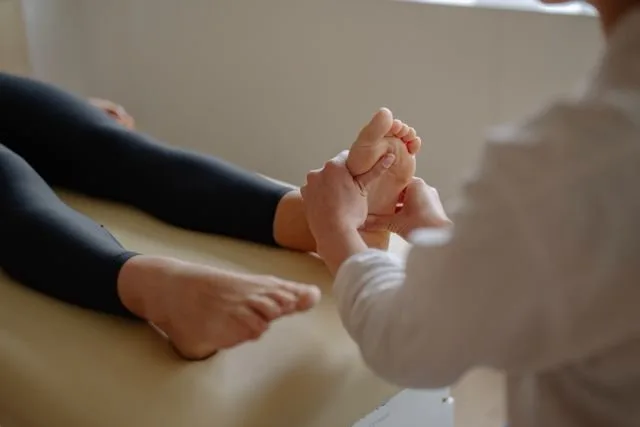
Manual therapy may be used when appropriate to address mobility restrictions and discomfort in the foot, ankle, calf or surrounding tissues.
Depending on the assessment, treatment may include hands-on techniques designed to improve movement and reduce symptoms.
Manual therapy is usually more useful when combined with active rehabilitation rather than treated as the entire recovery strategy.
4. Activity Modification
One of the most important parts of recovery is managing load.
If a specific activity repeatedly aggravates your heel pain, simply continuing at the same intensity may make recovery more difficult.
However, completely stopping all movement is not always necessary.
A physiotherapist can help you identify ways to modify your activity while maintaining an appropriate level of movement and fitness.
For example, an athlete may temporarily reduce running volume while maintaining other forms of exercise that place less stress on the foot.
5. Shockwave Therapy
Shockwave therapy is another treatment option that may be considered for certain cases of plantar fasciitis, particularly when symptoms are persistent.
Renew Physiotherapy specifically lists plantar fasciitis among the conditions treated with its shockwave therapy service. The clinic describes shockwave therapy as part of its approach to soft-tissue and tendon-related conditions.
Whether shockwave therapy is appropriate depends on your individual presentation. It should not be viewed as a universal solution for every case of heel pain.
A proper assessment should come first.
6. Footwear and Daily Activity Advice
Your physiotherapist may also discuss footwear, work demands, walking habits and exercise routines.
Small changes can sometimes reduce unnecessary irritation while you build your foot’s capacity again.
The objective is not to make you dependent on one particular shoe or support forever. Instead, the focus should be on helping your foot tolerate normal demands.
Is Shockwave Therapy Good for Plantar Fasciitis?
Shockwave therapy has become a commonly used treatment option for several musculoskeletal conditions, including plantar fasciitis.
The treatment uses acoustic energy delivered to the affected area. At Renew Physiotherapy, shockwave therapy is offered for plantar fasciitis as well as several tendon and soft-tissue conditions.
However, it is important not to approach shockwave therapy as a magic button.
A treatment may help manage symptoms, but long-term recovery also involves addressing the factors that contribute to the condition.
That may include improving strength, mobility, load tolerance and movement patterns.
For this reason, shockwave therapy may be used alongside physiotherapy exercises and rehabilitation rather than replacing active treatment.
How Long Does Plantar Fasciitis Take to Heal?
There is no single recovery timeline that applies to everyone.
Some people experience improvement relatively quickly after changing aggravating activities and starting an appropriate rehabilitation programme. Others have symptoms that persist for months, particularly when the condition has been present for a long time or contributing factors have not been addressed.
Recovery can depend on:
- How long symptoms have been present
- Severity of pain
- Activity level
- Work demands
- Exercise habits
- Foot and ankle strength
- Mobility
- Previous injuries
- Treatment consistency
- Ability to manage training and daily load
It is therefore better to focus on progress rather than expecting an exact number of days.
Useful signs of improvement can include:
- Less morning heel pain
- Increased walking tolerance
- Improved ability to stand
- Greater exercise tolerance
- Reduced pain after activity
- Improved foot and ankle strength
- Better movement confidence
Can You Walk With Plantar Fasciitis?
Many people with plantar fasciitis can continue walking, but the amount and intensity of walking that is appropriate can vary.
If walking consistently increases your symptoms, your activity level may need to be temporarily modified.
The objective is to find a manageable level of activity rather than automatically choosing either complete rest or pushing through severe pain.
If your work requires prolonged walking or standing, a physiotherapist can help you develop practical strategies for managing your workload while recovering.
Can You Exercise With Plantar Fasciitis?
In many cases, exercise can continue with appropriate modifications.
The type of exercise matters. High-impact activities such as running and jumping may place greater stress on the foot than lower-impact options.
Your physiotherapist can help determine which activities are appropriate based on your symptoms and goals.
A gradual return to impact is usually more useful than suddenly returning to your previous training volume after a period of inactivity.
For runners, this may mean gradually rebuilding distance, frequency and intensity.
For gym users, it may involve modifying exercises that place excessive load through the feet while maintaining strength and cardiovascular fitness through other movements.
Exercises That May Help Plantar Fasciitis
The most appropriate exercises depend on the individual, but rehabilitation programmes may include movements targeting the calf, foot and lower limb.
Examples can include:
Calf Strengthening
Strengthening the calf can help improve the lower limb’s ability to tolerate load during walking, running and other activities.
Foot Strengthening
Exercises that target the muscles supporting the foot can help improve strength and control.
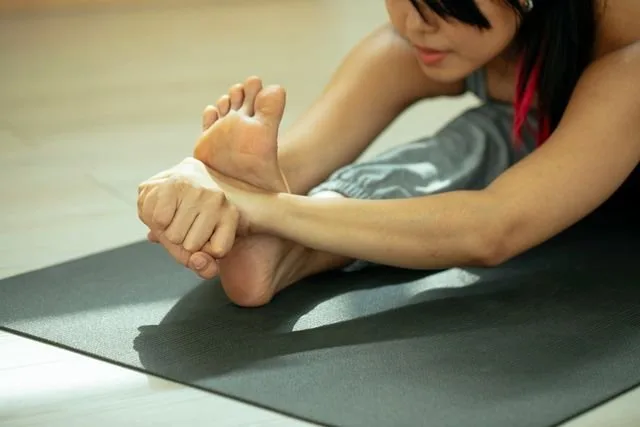
Calf Stretching
If calf flexibility is limited, stretching may be incorporated into a broader rehabilitation programme.
Balance Exercises
Balance work can help improve foot and ankle control and may be useful during later stages of rehabilitation.
Progressive Functional Exercises
As symptoms improve, exercises can become more demanding and more closely resemble the activities you want to return to.
The important point is that exercises should be individualized. An exercise that is appropriate for one patient may be too easy, too difficult or poorly suited to another person’s symptoms.
What Should You Avoid With Plantar Fasciitis?
There is no universal list of activities that every person with plantar fasciitis must avoid.
However, you should pay attention to activities that consistently cause significant symptom increases.
Potential aggravating factors may include:
- Sudden increases in running
- High volumes of jumping
- Long periods of standing
- Long walks beyond your current tolerance
- Returning to intense exercise too quickly
- Repeatedly training through significant pain
The goal is not fear of movement. It is sensible load management.
Your body needs an appropriate level of stress to become stronger, but excessive stress without adequate recovery can keep symptoms going.
Does Massage Help Plantar Fasciitis?
Massage may provide short-term relief for some people, particularly when muscle tightness around the calf and foot contributes to discomfort.
However, massage alone may not address all the factors associated with plantar fasciitis.
A broader physiotherapy programme can combine hands-on treatment with exercise, education, activity modification and other appropriate interventions.
Renew Physiotherapy also provides massage therapy alongside its physiotherapy and rehabilitation services.
If you are considering massage for heel pain, it is worth understanding whether your symptoms require a more comprehensive assessment.
Can Plantar Fasciitis Go Away on Its Own?
Some cases may improve with time, particularly when aggravating factors are reduced.
However, waiting indefinitely is not always the best strategy.
If heel pain continues for weeks, repeatedly returns, or begins affecting your work, exercise or daily activities, professional assessment can help identify why it may not be settling.
The earlier you understand the contributing factors, the easier it may be to make appropriate changes.
When Should You See a Physiotherapist for Heel Pain?
Consider seeking professional assessment if:
- Your heel pain continues for several weeks
- Morning pain is becoming frequent
- Walking is becoming uncomfortable
- You have stopped exercising because of pain
- You are changing your walking pattern
- Pain keeps returning after activity
- Home treatment has not produced meaningful improvement
- You are unsure whether plantar fasciitis is actually causing the pain
A physiotherapist can assess the problem and determine whether physiotherapy is appropriate or whether further medical investigation may be needed.
When Heel Pain May Need Medical Assessment
Not every type of heel pain should automatically be treated as plantar fasciitis.
Seek appropriate medical assessment if you have severe or sudden pain, significant swelling, an obvious injury, inability to bear weight, numbness, weakness, unexplained symptoms, or symptoms that are worsening despite appropriate care.
A physiotherapist can also help determine whether your presentation appears suitable for physiotherapy or whether another healthcare professional should be involved.
The objective is accurate care, not simply assigning every heel problem the same label.
How to Prevent Plantar Fasciitis From Returning
Once your symptoms improve, prevention becomes important.
The goal is not to avoid physical activity. It is to build the capacity to handle it.
Increase Activity Gradually
If you are returning to running, walking or sport, increase your workload progressively rather than making a dramatic jump.
Maintain Foot and Calf Strength
Strength should not be treated as something you work on only when injured.
Maintaining appropriate strength can help your feet and lower limbs handle everyday and sporting demands.
Pay Attention to Recovery
Training is only one part of physical adaptation. Recovery matters too.
Sleep, rest periods and appropriate progression can all influence your ability to tolerate exercise.
Address Mobility Restrictions
If your ankle or calf mobility is limited, addressing it may form part of your rehabilitation plan.
Don’t Ignore Recurrent Symptoms
A small amount of discomfort does not always mean you need to stop everything. However, recurring or progressively worsening pain deserves attention.
Repeatedly ignoring the same symptoms is not a particularly sophisticated rehabilitation strategy.
Plantar Fasciitis in Runners
Runners can be particularly frustrated by plantar fasciitis because stopping completely can feel like losing progress.
However, continuing to train through significant heel pain may not be the best option.
A physiotherapist can assess factors such as:
- Training volume
- Running frequency
- Recent changes in mileage
- Strength
- Mobility
- Recovery
- Foot and ankle mechanics
- Previous injuries
The goal is to determine how to maintain as much appropriate activity as possible while allowing the foot to recover.
Return-to-running programmes should generally be progressive rather than based on an arbitrary date.
Plantar Fasciitis for People Who Stand at Work
Athletes are not the only people who experience plantar fasciitis.
If your job involves standing or walking for much of the day, your feet may experience substantial repetitive loading.
For these individuals, rehabilitation needs to consider the realities of work.
Telling someone to “rest your foot” is not particularly helpful if their job requires them to stand for eight hours.
A better plan may involve:
- Modifying activity where possible
- Managing workday loading
- Improving foot and calf strength
- Addressing mobility restrictions
- Reviewing footwear
- Gradually increasing tolerance
- Developing strategies to manage symptoms
This is where individualized physiotherapy can be more practical than generic internet advice.
Plantar Fasciitis and Footwear
Footwear is frequently blamed for heel pain, but the relationship is more complicated than simply identifying a “good” or “bad” shoe.
A shoe that works well for one person may not feel comfortable for another.
Consider:
- Comfort
- Activity type
- Fit
- Wear and tear
- Training demands
- Time spent standing or walking
If you recently changed footwear and your symptoms appeared around the same time, that change may be worth discussing during your assessment.
Why Individualized Physiotherapy Matters
Two people can have similar heel pain but completely different contributing factors.
One person may have recently increased running volume. Another may spend long hours standing at work. A third may have reduced ankle mobility and weakness following an old injury.
Treating all three people with the exact same programme would make little sense.
That individual approach is particularly relevant for persistent foot pain, where the underlying contributing factors can vary considerably.
What Happens During a Physiotherapy Appointment?
If you have never visited a physiotherapist for heel pain, the first appointment may feel less complicated than you expect.
Your physiotherapist will typically want to understand:
- What symptoms you are experiencing
- When the symptoms started
- What makes them better or worse
- How the problem affects your daily activities
- Your exercise and work demands
- Any previous injuries
- What you want to return to doing
A physical assessment may then look at your movement, strength, flexibility, balance and foot and ankle function.
The information gathered during this process helps guide the treatment plan.
The aim is not simply to provide a treatment during the appointment. It is to give you a clearer understanding of the problem and a practical path toward recovery.
Why Choose Renew Physiotherapy for Plantar Fasciitis in Surrey?
Renew Physiotherapy and Sports Clinic provides physiotherapy and rehabilitation services in Surrey and nearby communities. Its physiotherapy service includes treatment for sports injuries, joint and muscle pain, workplace injuries, post-surgical conditions and chronic pain.
The clinic also offers shockwave therapy, which specifically lists plantar fasciitis among the conditions it treats.
Renew’s broader service offering includes physiotherapy, active rehabilitation, sports injury management, dry needling, laser therapy, shockwave therapy, massage therapy and other rehabilitation services.
For someone with persistent heel pain, having access to multiple treatment approaches can make it easier to build a plan around the individual’s presentation rather than relying on a single intervention.
Book Plantar Fasciitis Physiotherapy in Surrey
Persistent heel pain can affect much more than your feet. It can change the way you walk, reduce your exercise routine, interfere with work and make ordinary activities frustrating.
The good news is that plantar fasciitis can often be managed with an appropriate rehabilitation strategy.
The first step is understanding what is causing or contributing to your symptoms.
Frequently Asked Questions About Plantar Fasciitis Physiotherapy
What is the best treatment for plantar fasciitis?
There is no single treatment that is best for every person. Management may include exercise therapy, activity modification, manual therapy, education and other interventions depending on the individual’s symptoms and assessment.
Can a physiotherapist treat plantar fasciitis?
Yes. Physiotherapists can assess heel pain, identify contributing factors and develop individualized rehabilitation programmes. Treatment may focus on strength, mobility, movement, load management and symptom reduction.
How long does plantar fasciitis take to heal?
Recovery varies from person to person. Some cases improve within weeks, while persistent cases may take longer. The duration depends on factors such as symptom duration, activity level, rehabilitation and management of contributing factors.
Is walking bad for plantar fasciitis?
Walking is not automatically bad for plantar fasciitis. However, excessive walking beyond your current tolerance may increase symptoms. A physiotherapist can help determine an appropriate activity level.
Can I run with plantar fasciitis?
Some people may continue running with appropriate modifications, while others may need a temporary reduction in running. The right approach depends on symptom severity, training load and individual recovery.
Does stretching help plantar fasciitis?
Stretching may be useful when limited calf or ankle mobility contributes to symptoms. However, stretching is generally only one part of a broader rehabilitation programme.
Is shockwave therapy effective for plantar fasciitis?
Shockwave therapy is used for plantar fasciitis and other musculoskeletal conditions. Renew Physiotherapy offers shockwave therapy for plantar fasciitis. Whether it is appropriate for you depends on your individual assessment and symptoms.
Can massage help heel pain?
Massage may provide symptom relief for some people, particularly when surrounding muscles are tight. However, persistent heel pain may benefit from a broader assessment and rehabilitation programme.
Do I need physiotherapy for plantar fasciitis?
Not every case requires physiotherapy. However, if symptoms persist, repeatedly return or interfere with daily activities, a physiotherapy assessment can help identify contributing factors and determine appropriate treatment.
Can plantar fasciitis come back?
Yes. Symptoms can recur if the factors contributing to the original problem are not addressed or if activity is increased too quickly. Maintaining strength, managing training load and progressing activity gradually may help reduce the risk of recurrence.
Is heel pain always plantar fasciitis?
No. Several conditions can cause heel pain. A proper assessment is important, especially when symptoms are severe, persistent, unusual or associated with other concerning signs.
Final Thoughts
Plantar fasciitis can make walking, exercising and standing uncomfortable, but persistent heel pain does not have to become a permanent part of your routine.
The most effective approach is usually not about finding one miraculous treatment. It is about understanding the problem, managing load appropriately, improving physical capacity and progressing activity gradually.
At Renew Physiotherapy and Sports Clinic, individualized physiotherapy and rehabilitation services are available for patients across Surrey and surrounding communities.